Monthly Property News 7th Edition 2026.
“June property market report”
Here’s your property market wrap on the results from June 2026. We’ll cover home prices, rents, the strongest performing regions, current auction conditions, and the market factors now shaping buyer, seller and investor sentiment.
June marked a clear deterioration in the market, Cotality reported that national dwelling values fell 0.4% over the month, the largest monthly fall since December 2022.
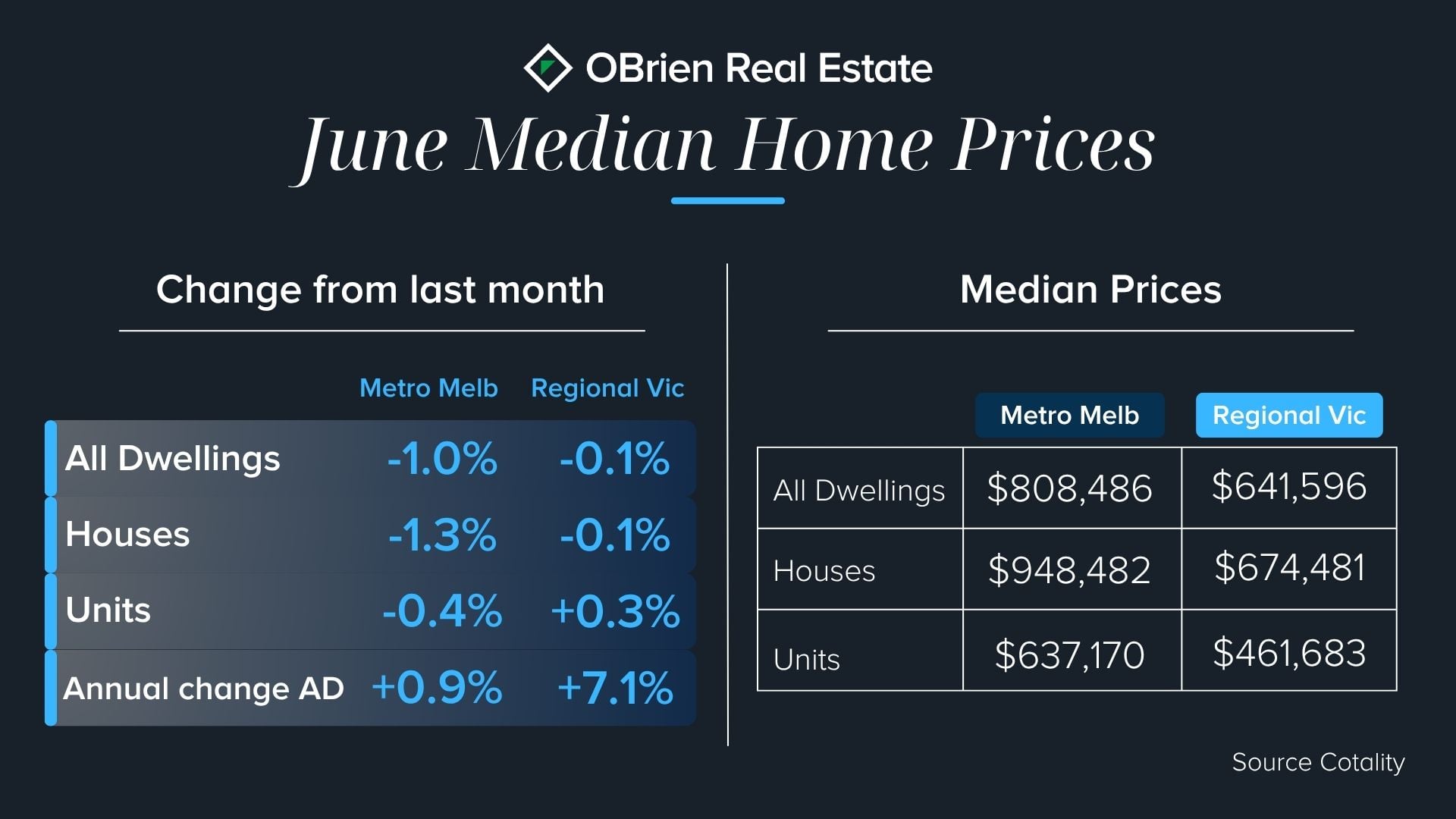
Sydney and Melbourne were the main drag on the national result. Sydney dwelling values fell 1.2% in June, while Melbourne values fell 1.0% in June and 2.6% over the quarter. By comparison, several of the mid-sized capitals are still recording growth, although the pace has slowed sharply. Brisbane rose 0.3%, Perth rose 0.7%, Hobart rose 0.6%.
Melbourne’s annual growth has also moved into negative territory, with Melbourne values now 0.9% lower than a year ago. The median dwelling value in Melbourne is now $808,486. Regional Victoria was softer as well, with values falling 0.1% over the month, although they 7.1% higher annually. The median dwelling value across Regional Victoria is now $641,596.
The June result points to a market where buyers are gaining more choice and more leverage, particularly in Melbourne. Melbourne values are now 4.0% below their March 2022 peak, and only 1.2% higher than they were five years ago. That is a very different story to markets such as Perth, where values are still at peak and have lifted 89.6% over the past five years.
For Melbourne, the softer result reflects weaker confidence, the proposed property taxation changes announced in the Federal Budget and higher interest rates. The buyer pool has narrowed, particularly at higher price points, and the market is now much less forgiving. In practical terms, buyers are no longer feeling the same urgency and sellers need to be far more strategic with price, presentation and campaign timing.
Auction clearance rate fallen below 50% since the last week of May, dropping to the low 40% range from late June. Capital city home sales over the three months to June are estimated to be 16.2% lower than the same time last year and 14.5% below the five-year average. At the same time, advertised supply across the capitals is almost 11% higher than a year ago. This combination of weaker clearance rates, softer sales volumes and higher stock levels is a clear sign that buyers are regaining negotiating power.
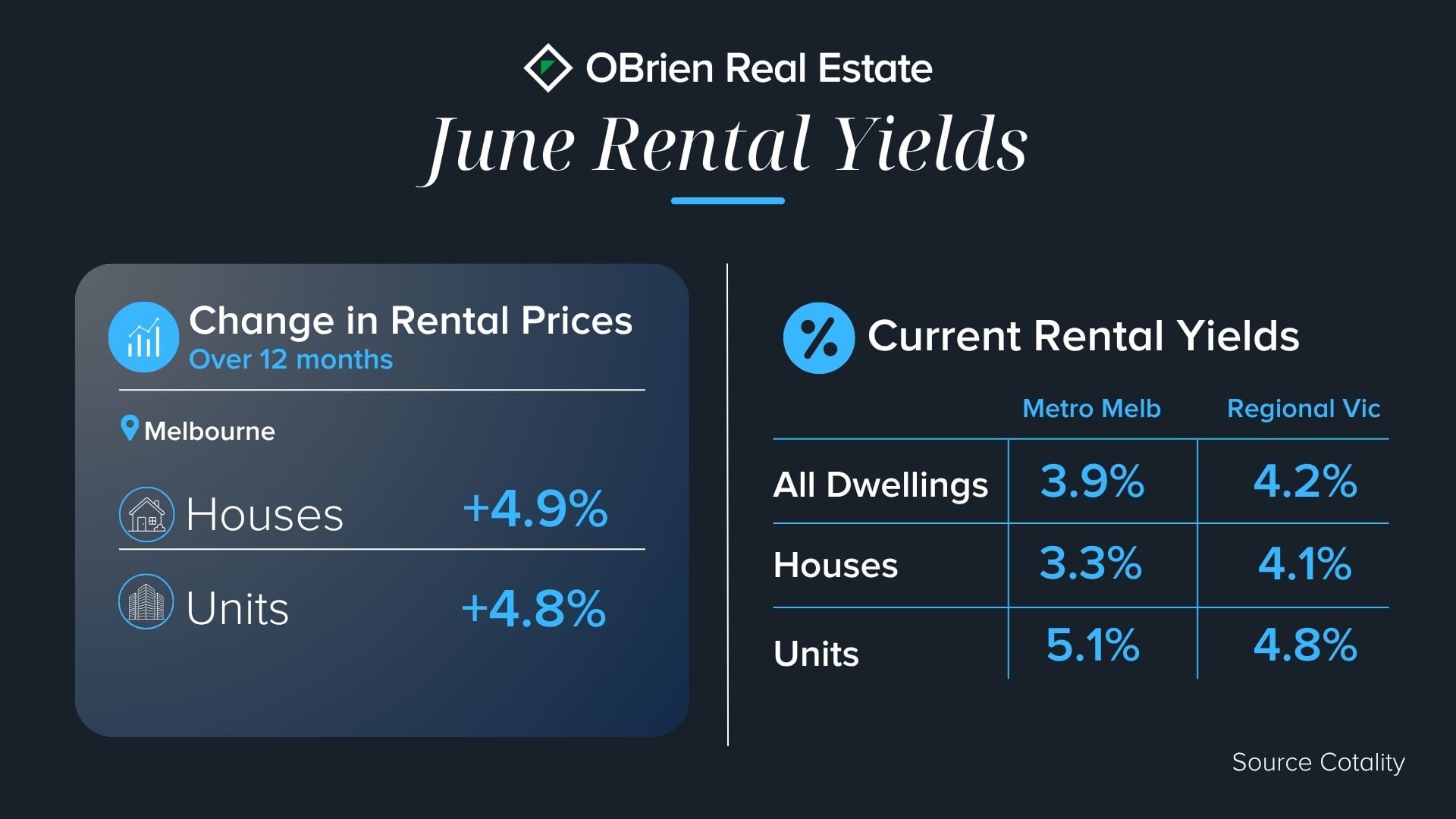
On the rental side, pressure remains a key part of the housing story. Nationally, rents rose 0.5% in seasonally adjusted terms in June, with annual rental growth holding at 5.9% over the financial year. That has added approximately $40 per week to the median rent nationally. Across both Melbourne and regional markets the rental market remains tight. Melbourne’s gross rental yield has lifted to 3.9%, while Regional Victoria remains slightly stronger at 4.2%. This rise in yields reflects the fact that rents are still growing while values are softening, but the investment equation remains challenging.
Even with Melbourne softening at the headline level, several markets are still recording annual growth. Cotality’s top 5 SA3 areas for Metropolitan Melbourne by annual dwelling value growth at June 2026 were:
- Sunbury — median value $740,158, annual growth 5.4%
- Brimbank — median value $729,767, annual growth 4.9%
- Casey – South — median value $808,354, annual growth 4.6%
- Frankston — median value $819,555, annual growth 3.7%
- Keilor — median value $1,035,611, annual growth 3.5%
The common theme across these areas is relative affordability, family appeal and access to established infrastructure.
Regional Victoria remains more resilient than Melbourne on an annual basis, but it is also starting to lose momentum. Cotality’s top 5 SA3 areas for Regional Victoria by annual dwelling value growth at June 2026 were:
- Grampians — median value $387,260, annual growth 15.9%
- Latrobe Valley — median value $519,041, annual growth 14.5%
- Glenelg – Southern Grampians — median value $453,410, annual growth 13.2%
- Mildura — median value $550,460, annual growth 12.9%
- Wellington — median value $486,887, annual growth 11.7%
Regional Victoria continues to benefit from lower entry prices, lifestyle appeal and more affordable housing options compared with Metropolitan Melbourne.
The recent Federal Budget has also added a new layer of uncertainty for investors. The proposed changes to negative gearing and capital gains tax settings are expected to reduce investor demand for established dwellings, particularly in markets where holding costs are already high.
The Reserve Bank also remains a major watchpoint. The RBA held the cash rate steady in June at 4.35%, providing some breathing space after earlier increases. However, the risk of another rate rise has not yet disappeared, particularly while underlying inflation remains above target range.
The major watchpoints for the remainder of the year will be inflation, interest rates, auction clearance rates, listing volumes, consumer sentiment and the market’s response to the proposed tax changes. If listings continue to rise and clearance rates remain weak, Melbourne may stay subdued. and the labour market remains tight. For buyers, this means borrowing capacity remains under pressure. For sellers, it means the market is likely to remain more price sensitive through the second half of the year.
Remember, the information provided is of a general nature only. You should always seek independent legal, financial, taxation or other advice based on your own circumstances.
Free Sales Price Report: https://www.obrienrealestate.com.au/property-report/
Free Rental Report: https://www.obrienrealestate.com.au/rental-report/
View our Annual Axis Reports: https://www.obrienrealestate.com.au/axis/